Blog

  • Pitigliano: Things to Do, Parking, Vie Cave and One-Day Itinerary

    Pitigliano: Things to Do, Parking, Vie Cave and One-Day Itinerary

    By Dimeo Luciano · Updated 26 October 2026

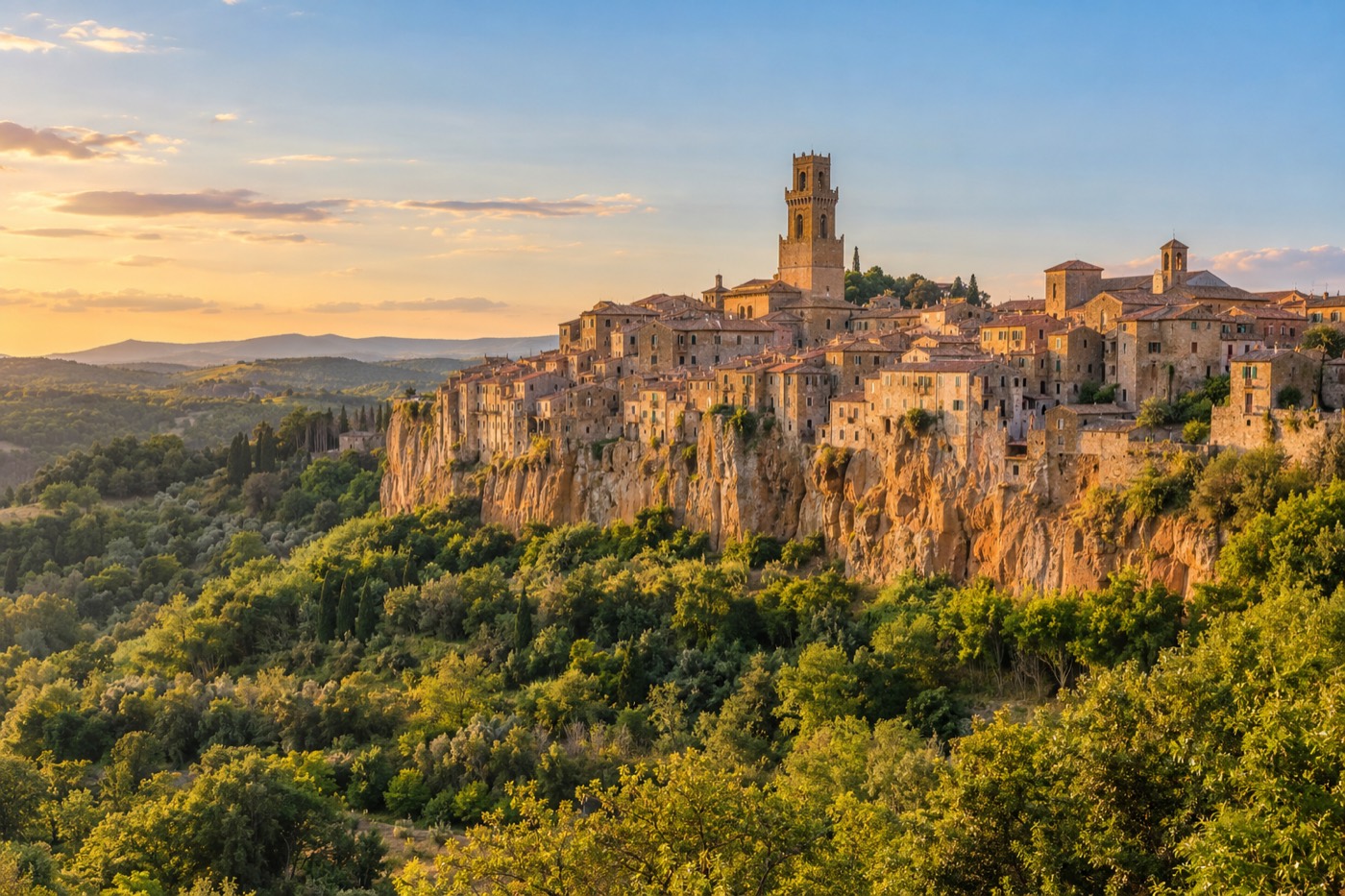
    Pitigliano rises dramatically from a tuff cliff in southern Tuscany. This practical one-day guide brings together the historic centre, the Jewish quarter, local food and the ancient Vie Cave, with clear advice on parking, walking times, families, rain and local events.

    Quick itinerary

    Parking → Piazza della Repubblica → Palazzo Orsini → Cathedral → Jewish quarter → lunch → Porta Sovana → Via Cava → Madonna delle Grazie viewpoint.

    Allow 6–8 hours for the complete day. The historic-centre walk takes about 3–4 hours without the Vie Cave; add 2–4 hours for a selected route through the Etruscan paths.

    Where to park and the ZTL

    The old centre is a limited-traffic zone. Leave the car outside the gates and continue on foot. Useful areas are around Piazza della Repubblica, Piazza Garibaldi and Via Santa Chiara. Signs, charges and access rules can change, so always check the parking meter and municipal notices on arrival.

    What to see in the historic centre

    Enter through the monumental aqueduct and begin at Piazza della Repubblica, the town’s great panoramic terrace. Visit Palazzo Orsini, then follow Via Roma and Via Zuccarelli through stone lanes to the Cathedral of Saints Peter and Paul. Continue slowly: arches, courtyards and views over the valleys are part of the experience.

    Palazzo Orsini and the archaeological museum

    Palazzo Orsini houses museums and collections linked to the history of Pitigliano and the surrounding Etruscan territory. Opening times and tickets vary by season; consult the official museum website before travelling.

    The Jewish quarter

    Pitigliano is known as “Little Jerusalem”. In the historic Jewish quarter you can visit the synagogue and discover spaces once used for ritual baths, the bakery and the kosher cellar. Check current visiting hours locally.

    Vie Cave: distance and difficulty

    The Vie Cave are ancient paths cut deep into volcanic tuff. A complete circuit around Pitigliano is roughly 10 kilometres and generally requires 3–4 hours. Choose a shorter section if you have limited time. Wear shoes with good grip: after rain the ground can be muddy and slippery, and some passages are steep.

    What and where to eat

    Stop in the centre for pici, acquacotta, wild-boar dishes, local pecorino and a glass of Bianco di Pitigliano DOC. The traditional sweet is the Sfratto dei Goym, a rolled pastry filled with walnuts and honey. Book ahead at weekends and during festivals.

    One-day timetable

    • 09:30 – Park and walk to Piazza della Repubblica.
    • 10:00 – Palazzo Orsini and the old lanes.
    • 11:30 – Cathedral and Jewish quarter.
    • 13:00 – Tuscan lunch in the centre.
    • 14:30 – Porta Sovana and a selected Via Cava.
    • 17:30 – Sunset view from Madonna delle Grazie.

    Families and accessibility

    The centre is compact but has slopes, steps and uneven paving. A lightweight pushchair is easier than a large one. With children, shorten the Vie Cave route and avoid the paths after heavy rain. Travellers with reduced mobility should favour Piazza della Repubblica and the most level central streets.

    What to do when it rains

    Choose Palazzo Orsini, the archaeological museum and the Jewish-quarter interiors. Postpone the Vie Cave during heavy rain or when official warnings advise against walking.

    Events and village festivals

    Among the best-known appointments are SettembreDiVino, dedicated to local cellars and flavours, and the traditional Torciata di San Giuseppe in March. Dates and access arrangements change each year: verify the programme on the municipality’s official channels before leaving.

    Official sources

    Created by Dimeo Luciano.

  • Tuscany without a car: train and walking itineraries

    Tuscany without a car: train and walking itineraries

    Travelling around Tuscany without a car by train and on foot

    Exploring Tuscany without a car is possible when you choose central stations, walkable routes and realistic connections. Services to small villages are less frequent, so always check both the outbound and return journey.

    The easiest bases

    Florence, Pisa and Lucca

    These cities are well connected by train and their historic centres can be explored on foot. Leave enough time between connections and book only attractions that require a fixed entry time.

    Livorno, San Vincenzo and Piombino

    The coastal railway reaches several useful bases. In San Vincenzo, the town centre and beach are close to the station. Piombino is also walkable; for Baratti and Populonia, check seasonal bus timetables.

    Inland villages

    Massa Marittima and other hill towns normally require a train-and-bus combination. Avoid relying on the last connection of the day and check reduced Sunday and public-holiday services.

    Three-day coastal itinerary

    Day 1: arrive in San Vincenzo and walk along the seafront. Day 2: take the train to Piombino and explore the historic centre. Day 3: visit Livorno or Pisa before travelling home.

    Tickets and luggage

    Buy and validate tickets according to the operator’s rules. Travel light, save timetables offline and carry a power bank.

    When public transport is not ideal

    For isolated trails, evening visits or several villages in one day, a car may be more practical. Alternatively, book a licensed tour or taxi in advance.

    Official sources

    Created by Dimeo Luciano.

  • Christmas Markets in Tuscany 2026: Dates, Towns and Travel Tips

    Christmas Markets in Tuscany 2026: Dates, Towns and Travel Tips

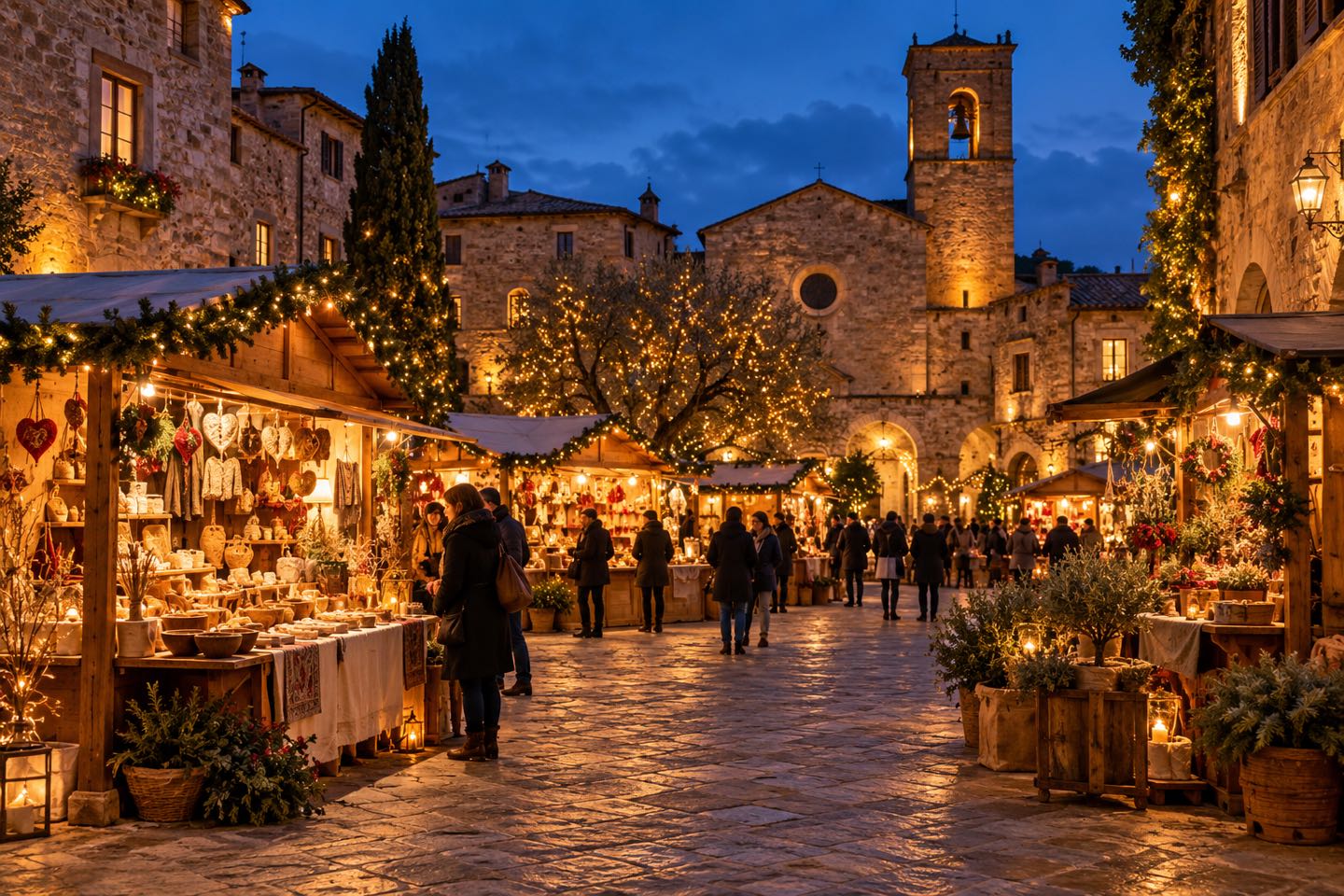
    Christmas markets in Tuscany in 2026 combine medieval towns, artisan stalls, local food and evening lights. This guide lists confirmed dates, helps you choose the right destination and explains how to plan parking, public transport and a two-day itinerary.

    Confirmed Christmas market dates in Tuscany for 2026

    Montepulciano: 21 November 2026 to 6 January 2027

    The official calendar lists openings on 21–22 November, 28–30 November, 5–8 December, 12–15 December and every day from 19 December 2026 to 6 January 2027. Entry to the market is free, while selected attractions such as Santa’s Castle require a ticket. Use the official parking and shuttle map on busy weekends.

    Radicondoli: 28–29 November 2026

    The medieval town hosts its seventh Christmas Market, with crafts, local produce, food, music and travelling performances. It is a good choice for visitors who prefer a smaller hill-town atmosphere.

    San Quirico d’Orcia and Bagno Vignoni

    The 2026 Val d’Orcia market calendar includes Bagno Vignoni on 21 November and San Quirico d’Orcia on 5 and 27 December. Check the official event page before departure.

    Christmas markets in Tuscany: calendar by weekend

    • 21–22 November: Montepulciano; Bagno Vignoni on 21 November.
    • 28–29 November: Montepulciano and Radicondoli.
    • 5–8 December: Montepulciano; San Quirico d’Orcia on 5 December.
    • 12–15 December: Montepulciano on the dates shown by the organiser.
    • 19 December–6 January: Montepulciano every day.
    • 27 December: San Quirico d’Orcia.

    Which Tuscan Christmas market should you choose?

    • For families: Montepulciano offers the broadest selection of attractions.
    • For a small medieval town: choose Radicondoli.
    • For a romantic weekend: combine Montepulciano with the Val d’Orcia.
    • Without a car: consider Florence, Arezzo, Lucca or Pistoia only after checking the final 2026 programmes and the last return train.

    A simple two-day itinerary

    Saturday: parking → historic centre → landmarks → lunch → Christmas market → lights and viewpoint. Arrive before 10:30 so you can visit the town before the busiest afternoon hours.

    Sunday: choose one nearby town, take a short walk, enjoy a local lunch and leave enough time for the return journey. Avoid combining destinations on opposite sides of Tuscany.

    Parking, trains and the best time to arrive

    Hill-town car parks fill quickly. Follow temporary event signs, use official shuttles where available and do not rely only on your navigation app near restricted traffic zones. For city markets, trains can avoid traffic and ZTL areas, but always check the distance from the station and the final return service.

    What to eat and buy

    Look for crafts and food with a clearly stated origin: ceramics, woodwork, textiles, honey, preserves and handmade decorations. Seasonal Tuscan treats may include castagnaccio, cantucci, ricciarelli, panforte, brigidini, roasted chestnuts and mulled wine.

    Christmas markets with children or in the rain

    With children, plan frequent breaks and visit in the morning or early afternoon. Bring warm waterproof clothing. In bad weather, combine the market with museums, churches, historic buildings or an indoor food stop. Ask the organiser about accessible routes, toilets, shuttles and uneven streets.

    Frequently asked questions

    When do Christmas markets start in Tuscany in 2026?

    The first confirmed dates in this guide begin on 21 November 2026 in Montepulciano and Bagno Vignoni.

    Are Tuscan Christmas markets free?

    Entry to stalls is often free. Attractions, museums, parking and shuttles may charge a fee.

    What is the largest Christmas market in Tuscany?

    The Montepulciano organiser describes its event as the largest Christmas market in Central Italy.

    Explore Tuscany in English

    Official sources

    Created by Dimeo Luciano.
  • Bibbona: Things to Do, Parking, Beaches and One-Day Itinerary

    Bibbona: Things to Do, Parking, Beaches and One-Day Itinerary

    Bibbona combines a quiet medieval village, the countryside of the Etruscan Coast and the sea at Marina di Bibbona. This practical guide plans a complete day with parking, a walking route, local food, family tips, a rainy-day alternative, festivals and Christmas markets.

    Bibbona at a glance

    • Recommended time: one day; two days if you add the coast and Macchia della Magona.
    • Village walk: about 2–3 km, with slopes and stone paving.
    • Best for: couples, families and travellers seeking a less crowded village.
    • Best season: spring, early summer and September.

    Where to park

    The historic centre is partly covered by a limited-traffic zone. The easiest option is to park outside the old core, especially around the Il Mandorlo sports ground or in signposted areas along the approaches, then continue on foot. During events and peak season, follow temporary signs because access, spaces and charges may change.

    A simple one-day itinerary

    Parking → historic centre → Sant’Ilario parish church → Santa Maria della Pietà → lunch → Fonti di Bacco and lanes → Piazza della Vittoria viewpoint.

    Morning: historic centre and monuments

    Walk slowly through the old village to the Parish Church of Sant’Ilario. Continue past medieval lanes and gateways, then reach the Renaissance church of Santa Maria della Pietà, just outside the tightest group of houses. Notice the arches, façades and small panoramic openings.

    Stone lanes and historic houses in the centre of Bibbona
    A slow walk through lanes, arches and small squares.

    Lunch: what to eat

    Choose a village or countryside trattoria for wild-boar pappardelle, Tuscan soups, crostini, cured meats, pecorino and dishes made with local olive oil. Near the coast, fish and seafood cooking are more common. Booking is sensible in busy periods.

    Afternoon: springs and viewpoint

    After lunch, look for the Fonti di Bacco and complete the loop at Piazza della Vittoria, near the former fortress area, for views across the hills. If time allows, drive to Macchia della Magona for a woodland walk or to Marina di Bibbona for sunset.

    Marina di Bibbona and beaches

    Marina di Bibbona is roughly 10 km from the village. Coastal pinewoods connect shaded paths with broad sandy beaches. In summer, arrive early, use marked parking areas and check local charges. The beaches are popular with families, although sea and wind conditions can change quickly.

    Pinewood path leading to Marina di Bibbona beach
    The coastal pinewood opens onto Marina di Bibbona beach.

    With children

    The village is compact but includes slopes and cobbles, so a sturdy pushchair is useful. Alternate sightseeing with a square, the Marina pinewood or an easy section of Macchia della Magona. Carry water, hats and insect repellent in summer.

    What to do when it rains

    Focus on the churches, exhibitions at the Old Town Hall when open and a relaxed local lunch. You can also combine Bibbona with Bolgheri or Castagneto Carducci after checking opening times and reservations.

    Festivals, fairs and Christmas markets

    Traditional events include the Easter Via Crucis and historic Festa del Cedro, with market stalls, food and activities. Summer brings concerts, guided visits and evenings in the old town; the long-running Livestock Fair is held in the La California area in August. Christmas markets, lights and family activities may be scheduled in December: dates change each year, so check the municipality’s official events calendar before travelling.

    Practical information

    • Check ZTL restrictions, parking and summer transport on the municipal website.
    • Wear shoes with good grip for lanes and paths.
    • Opening hours, prices and events may change.
    • Last updated: October 2026.

    Continue your journey

    Castagneto Carducci and Bolgheri · San Vincenzo · Volterra in one day

    Official sources

    Editorial guide based on the Municipality of Bibbona tourism pages and its official events calendar. Always verify current access and opening information.

    Written and edited by Dimeo Luciano.

  • Gavorrano: Things to Do, Mining Park and One-Day Itinerary

    Gavorrano: Things to Do, Mining Park and One-Day Itinerary

    Gavorrano is a medieval hill village in the Upper Maremma, known for stone lanes, wide views and its mining heritage. This one-day plan combines the old centre, local food and the Mining Park at a comfortable pace.

    Route at a glance

    Duration: 6–8 hours · Distance: about 2 km in the village plus transfers to the park · Getting around: car and walking

    1. Parking: use a signed area outside the narrowest streets and check temporary restrictions.
    2. Historic centre: walk through arches, gates, walls and steep stone lanes.
    3. Landmarks: visit San Giuliano Church and places connected with the legend of Pia de’ Tolomei.
    4. Lunch: choose a trattoria or agriturismo for acquacotta, Maremma tortelli or game.
    5. Mining Park: choose the Mining Gallery Museum, Ravi Marchi Mine or GEOMET according to opening times.
    6. Viewpoint: finish at a safe panoramic spot overlooking the Maremma.

    What to see in Gavorrano

    The historic centre preserves the structure of a medieval village, with sloping streets, stone houses, arches and remains of defensive walls. Distances are short, but the gradient makes comfortable shoes important. San Giuliano Church is a central stop, while viewpoints explain why the village was built on the slope of Monte Calvo.

    Gavorrano is also linked to Pia de’ Tolomei, remembered by Dante in Purgatory. The village commemorates the legend during the summer Salto della Contessa event; check dates and traffic arrangements with the municipality.

    Medieval stone lanes in the historic centre of Gavorrano
    Stone lanes and walking routes through the old village

    Mining Park and Teatro delle Rocce

    Gavorrano’s modern identity is inseparable from mining. The Park gateway provides information and tickets for the Mining Gallery Museum, Ravi Marchi Mine and GEOMET. Tours may run only at set times, so check availability and book before travelling.

    Teatro delle Rocce is an open-air venue created in a former quarry. During concerts and events, parking, access and shuttle arrangements can change.

    Gavorrano Mining Park and Teatro delle Rocce
    The restored mining landscape and Teatro delle Rocce

    One-day itinerary

    Morning

    Park outside the narrow centre and allow around two hours for the village, San Giuliano Church and viewpoints. Add time for photographs and uphill sections.

    Lunch

    Reserve at least one hour. A trattoria, osteria or agriturismo is the best choice; booking is wise in summer and at weekends.

    Afternoon

    Drive to the Mining Park and choose one main guided experience. Allow roughly two to three hours including ticket collection and transfers; check the official timetable because guided visits may start only at fixed times. If the underground museum is unavailable, visit the information point, accessible outdoor areas and Teatro delle Rocce.

    Late afternoon

    Return towards the village or stop at a safe signed viewpoint before sunset. Avoid adding another distant village unless you have finished the mining visit early.

    Parking and practical access

    Use authorised spaces and follow local signs, as events or roadworks may alter circulation. The village and Mining Park are separate stops. The old centre is best explored on foot; shoes with good grip are recommended.

    What to eat

    Look for acquacotta, ricotta-and-chard tortelli, hare pappardelle, mushroom pasta, game, local meat and extra-virgin olive oil. Ask for the daily dish and the origin of ingredients.

    Families and rainy days

    Families: choose fewer uphill stops and check age limits, length and accessibility of mine tours. Rain: avoid slippery paths and exposed viewpoints; confirm indoor visits to the gallery museum or GEOMET.

    Nearby places

    Continue to Scarlino or Massa Marittima. Caldana, Ravi and Giuncarico deserve separate stops.

    Frequently asked questions

    How long do you need in Gavorrano?

    Allow a full day if you want to combine the historic centre with a guided mining visit. The village alone takes about two hours at a relaxed pace.

    Should the Mining Park be booked in advance?

    Yes, whenever a guided or underground visit is planned. Check the official calendar, meeting point, age restrictions and accessibility before travelling.

    Is Gavorrano suitable for children?

    Yes, if the route is shortened and the selected mine visit is suitable for their age. Bring water, use shoes with good grip and allow extra time on the slopes.

    What is the best time to visit?

    Spring and early autumn are comfortable for walking. In summer start early, carry water and check evening events; in winter verify opening days before departure.

    Official sources

    Information checked on 18 October 2026.

    LIVE THE VILLAGE

    Events, food festivals and village celebrations in Gavorrano

    Local events can help you choose the best time to visit. Dates may change every year: always check the official programme, times, traffic arrangements and booking requirements before travelling.

    • Salto della Contessa
    • Teatro delle Rocce
    • Eventi del Parco Minerario
    • Sagre e feste nelle frazioni

    Practical tip: during festivals arrive early, use the parking areas indicated by the organisers and book restaurants or accommodation on popular weekends.

    Check the official programme →

  • Volterra in One Day: Things to Do, Parking and Itinerary

    Volterra in One Day: Things to Do, Parking and Itinerary

    Volterra combines Etruscan history, medieval architecture, alabaster craftsmanship and wide Tuscan views. This realistic one-day guide covers parking, walking times, food, families and rainy-day alternatives.

    Where to park in Volterra

    The historic centre is largely pedestrian and protected by a ZTL. Convenient official car parks include Porta Fiorentina, Viale Porretti and Piazzale G. Boscaglia. Volterra Tourism currently lists €2 per hour between 8:00 and 20:00 and, where available, €12 for a full day. Stazione and Viale dei Filosofi are listed at €1.50 per hour and €10 per day. Always check the signs and meter.

    One-day walking itinerary

    Parking → historic centre → monuments → lunch → walk → viewpoint. Allow a full day for a central route of roughly 3–4 km because the streets are steep and museums take time.

    1. Porta all’Arco and Piazza dei Priori

    Enter through the Etruscan Porta all’Arco and continue to Piazza dei Priori. See Palazzo dei Priori, explore the lanes and stop at traditional alabaster workshops.

    Porta all’Arco, Etruscan gateway in Volterra
    Porta all’Arco · Wikimedia Commons, CC BY-SA 4.0
    Piazza dei Priori and Palazzo dei Priori in Volterra
    Piazza dei Priori · Wikimedia Commons, CC BY 3.0

    2. Cathedral, Baptistery and Guarnacci Museum

    Walk to Piazza San Giovanni for the Cathedral and Baptistery. Choose the Guarnacci Etruscan Museum if you want to understand the city’s ancient past; allow at least 60–90 minutes.

    3. Roman Theatre

    The Roman Theatre at Vallebuona is one of the city’s essential sights. It can be viewed from above, but entering the archaeological site gives a clearer view of the theatre and nearby baths.

    Roman Theatre of Volterra in Vallebuona
    Roman Theatre · Public domain, Wikimedia Commons

    4. Lunch, alabaster and the final view

    Return to the centre for lunch, then visit an alabaster workshop or museum. Continue towards the castle park and Etruscan acropolis, ending at a viewpoint or the Balze. Keep away from unstable edges and follow local restrictions.

    What to eat

    Look for Val di Cecina dishes such as vegetable and bread soups, wild-boar pappardelle, pecorino cheese, Tuscan cured meats and seasonal desserts. Book ahead at weekends.

    Volterra with children

    Choose one museum rather than several and alternate indoor visits with squares and viewpoints. Streets are steep and uneven, so comfortable shoes are essential and stroller access should be checked in advance.

    What to do when it rains

    Focus on the Guarnacci Museum, the Civic Art Gallery, the Alabaster Ecomuseum, the Diocesan Museum, the Cathedral and craft workshops. The 72-hour Volterra Card may be useful for multiple visits; confirm the current price and included attractions.

    Official sources

    Created by Dimeo Luciano.

    LIVE THE VILLAGE

    Events, food festivals and village celebrations in Volterra

    Local events can help you choose the best time to visit. Dates may change every year: always check the official programme, times, traffic arrangements and booking requirements before travelling.

    • Volterra AD 1398
    • Volterragusto — 24 October–1 November 2026
    • Astiludio
    • VolterraTeatro

    Practical tip: during festivals arrive early, use the parking areas indicated by the organisers and book restaurants or accommodation on popular weekends.

    Check the official programme →

  • Budget Tuscany: free sights and parking

    Budget Tuscany: free sights and parking

    Free panorama of a Tuscan village

    An economical Tuscany does not mean giving up quality: many historic centres, squares, panoramas and beaches are accessible for free. Savings arise above all from compact itineraries, well-chosen parking spaces and planned meals.

    Villages and free visits

    Walking in the centers of Suvereto, Campiglia Marittima, Sassetta, Castagneto Carducci and Scarlino does not require a ticket. Churches, museums and towers may have their own opening hours or costs.

    Sea and views without a ticket

    Piazza Bovio in Piombino, the seafront of San Vincenzo and many accesses to the beaches are free. Parking, service and establishment costs remain possible.

    How to save on parking

    Look for public areas outside the centre, read stall colors and signs, use the parking disc when asked and do not follow the navigator in restricted traffic areas. In high season it arrives early.

    Two-day economical itinerary

    Day 1: San Vincenzo, walk and free beach; in the afternoon Campiglia. Day 2: Piombino, Piazza Bovio and historic center, with packed lunch or set menu.

    Realistic budget

    Calculate transport, parking, water, any entrance fees and a margin for unexpected events. Bring a water bottle and snack, but buy local products when your budget allows.

    What to avoid

    Do not park outside the stalls, do not enter private areas and do not use old fare information. A fine quickly nullifies any savings.

    Before leaving

    Times, prices, transportation and events may change. Always check official sources, book when required and check the weather.

    Official sources

    Created by Dimeo Luciano.
  • Tuscany without a car: itineraries by train and on foot

    Tuscany without a car: itineraries by train and on foot

    Trip to Tuscany without a car

    Visiting Tuscany without a car is possible by choosing central stations, walking routes and realistic connections. For small villages the connections are less frequent: always check the outward and return timetables on the same day.

    The simplest basics

    Florence, Pisa and Lucca

    They are well connected by train and allow visits on foot from the centre. Book only services that require precise times and leave room between connections.

    Livorno, San Vincenzo and Piombino

    The coastline allows you to reach various locations. In San Vincenzo the center and beach are close to the station. From Piombino you can visit the center on foot; for Baratti and Populonia check seasonal buses and frequencies.

    Massa Marittima and internal villages

    They normally require a combination of train and bus. Don’t plan for the last available connection and check for any reduced holiday services.

    Three-day coastal itinerary

    Day 1: arrival in San Vincenzo and walk along the sea. Day 2: train to Piombino and visit to the centre. Day 3: Livorno or Pisa before returning.

    Tickets and luggage

    Purchase or validate travel tickets according to the operator’s rules. Travel light, save schedules offline, and bring an external battery.

    When it’s not convenient

    For isolated paths, evening visits or multiple villages on the same day, the car may be more practical. Alternatively, consider authorized tours or booked taxis.

    Before leaving

    Times, prices, transportation and events may change. Always check official sources, book when required and check the weather.

    Official sources

    Created by Dimeo Luciano.

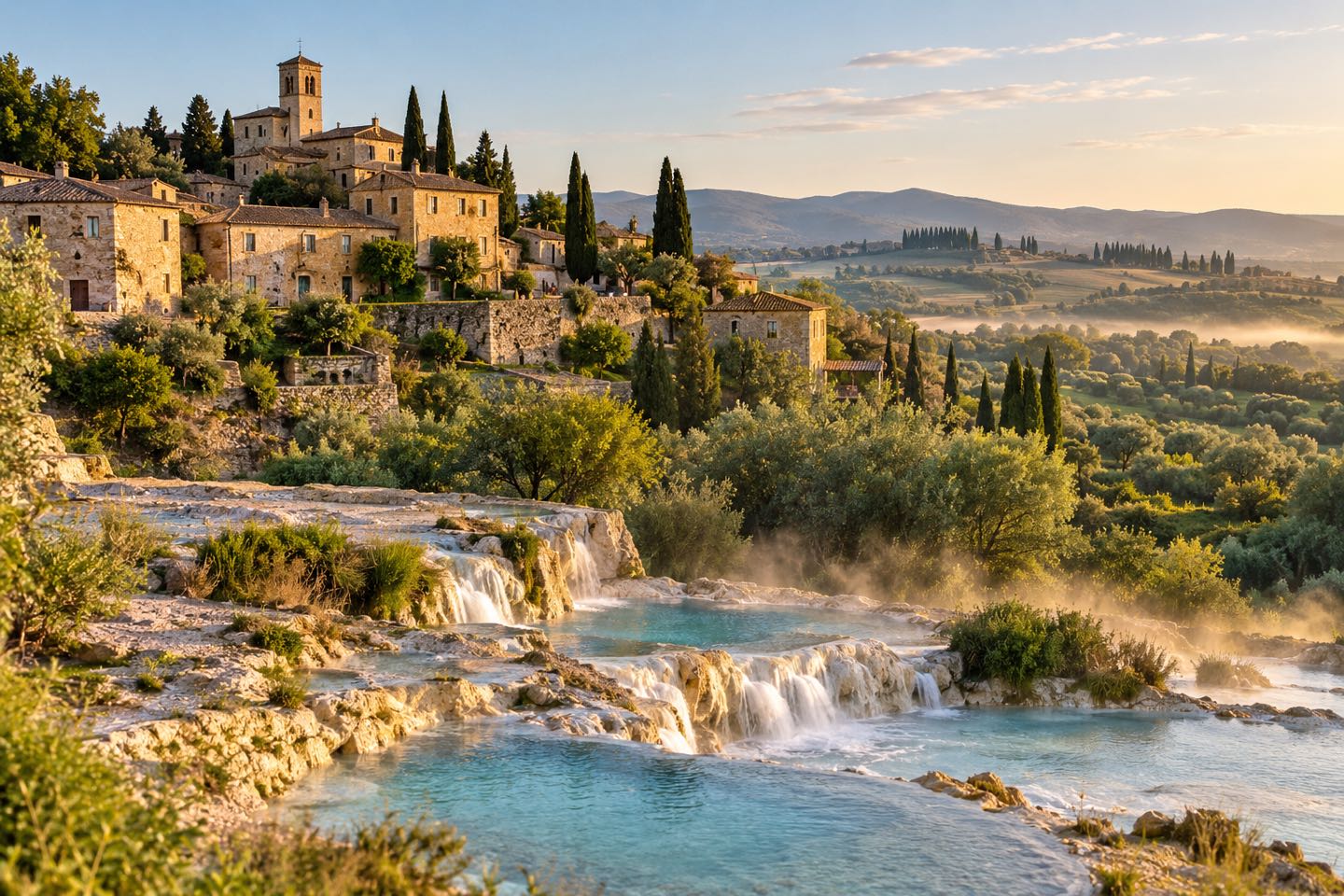
  • Villages near spas in Tuscany: destinations and practical advice

    Villages near spas in Tuscany: destinations and practical advice

    Tuscan village near thermal springs

    Villages and spas allow you to combine culture, walks and well-being. The spa facilities apply their own timetables and rates: this guide helps you choose the area, but reservations and conditions must be checked directly.

    Villages to combine with spas

    Sassetta and the Etruscan Coast

    Sassetta is suitable for woods, stone villages and private wellness facilities. Pair it with Castagneto Carducci or Suvereto.

    Bagno Vignoni and San Quirico d’Orcia

    Bagno Vignoni offers a unique water square; San Quirico completes the day with its historic center and gardens. Do not enter the monumental pools and respect local rules.

    Saturnia and Montemerano

    Montemerano is a suggestive base for the spa area of Saturnia. Park in authorized areas and do not leave waste in natural areas.

    How to organize your day

    Visit the village in the morning, have a light lunch and book the spa in the afternoon. Bring slippers, a bathrobe if required and a bag for wet clothes.

    Families and health

    Check minimum age, water temperature, accessibility and health information directly with the facility. If you have any medical concerns, ask your healthcare professional.

    Before leaving

    Times, prices, transportation and events may change. Always check official sources, book when required and check the weather.

    Official sources

    Created by Dimeo Luciano.

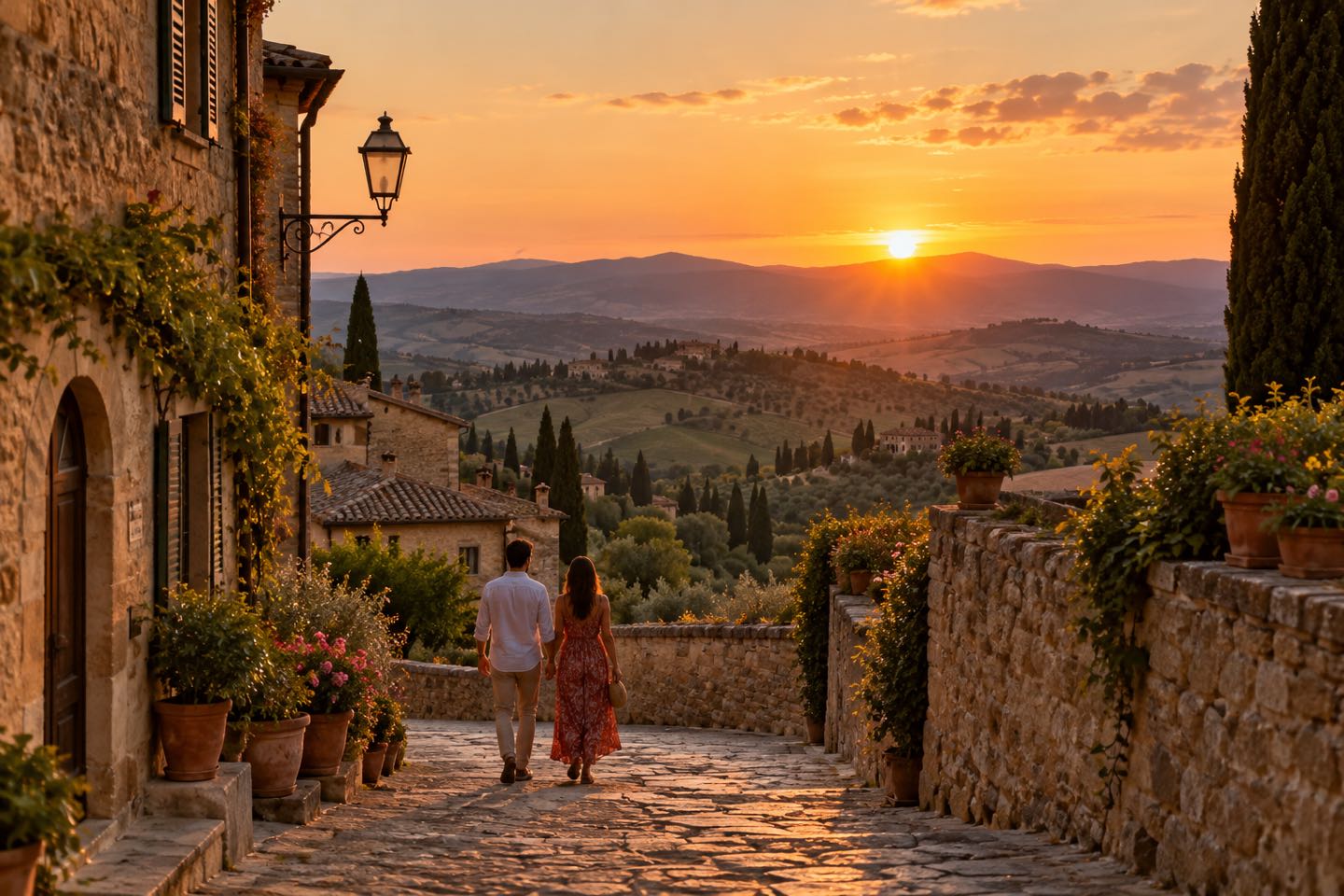
  • Romantic weekend in Tuscany: villages, sunsets and itinerary

    Romantic weekend in Tuscany: villages, sunsets and itinerary

    Couple in a Tuscan village at sunset

    A romantic weekend in Tuscany works best when it alternates a cozy village, a panorama, an unhurried dinner and little travel. This proposal uses destinations on the Etruscan Coast and Val di Cornia.

    Romantic two-day itinerary

    Day 1: Bolgheri and Castagneto Carducci

    Walk among the cypresses and the center of Castagneto and Bolgheri. Book a responsible tasting and choose a dinner with a seasonal menu.

    Day 2: Baratti and Suvereto

    Dedicate the morning to the Gulf of Baratti and the village of Populonia. In the afternoon reach Suvereto for alleys, panorama and Maremma cuisine.

    Where to see the sunset

    Piazza Bovio in Piombino, the promontory of Populonia and the terraces of the hillside villages are excellent choices. Arrive with light, respect fences and do not stop in dangerous places.

    How much does it cost

    The walk in the villages is free. The budget depends on accommodation, restaurant and tastings: always ask for full price, duration and cancellation conditions.

    If it rains

    Choose museums, spas, a booked winery or an early dinner. Avoid filling your schedule: the value of the weekend is also in your free time.

    Before leaving

    Times, prices, transportation and events may change. Always check official sources, book when required and check the weather.

    Official sources

    Created by Dimeo Luciano.